Pressure, Power, and Peace
This post is about 3 words a pastor in Belgrade gave me when I showed up at his house burned out: pressure, power, and peace. The pastor is Danko Dudok, who pastors Center Church there. Over lunch he gave me Acts 1:8, which has only 1 of his 3 words in it. Jesus puts the other 2 side by side in John 16:33, on the night before the cross.
Every verse here is quoted from the Berean Standard Bible (it’s public domain) and the references link to the verses on Dewfall, the Bible app I built.
What does Acts 1:8 mean?
In Acts 1:8 Jesus promises his followers power when the Holy Spirit comes upon them so they can be his witnesses, from Jerusalem to the ends of the earth. They receive that power as a gift and it sends them out to tell people about Jesus.
He says it on the day he goes back to heaven (Acts 1:9). The disciples have just asked him “Lord, will You at this time restore the kingdom to Israel?” (Acts 1:6), which is basically when are you going to fix everything? Jesus answers:
Jesus replied, “It is not for you to know times or seasons that the Father has fixed by His own authority. But you will receive power when the Holy Spirit comes upon you, and you will be My witnesses in Jerusalem, and in all Judea and Samaria, and to the ends of the earth.”
“You will receive” is a promise (a plain future in the Greek). Paul says where that kind of power comes from: “this surpassingly great power is from God and not from us” (2 Corinthians 4:7).
And the power is for something. The very next words are “you will be My witnesses”. The English Standard Version (ESV) Study Bible calls Acts 1:8 “the thematic statement for all of Acts” (in its notes on Crossway’s site). The book follows the verse’s own map: Jerusalem first, then Judea and Samaria, then the ends of the earth.
Pressure: what Christian burnout looked like for me
Danko gave me this verse in Belgrade when I was cooked. Between 10 September and 10 October my calendar has 7 conferences on it, in Zurich, Zadar, Warsaw, Copenhagen, Prague and Niš. There were personal commitments too. My dear friend Jithin’s bachelor party had us staying up late many nights and straight after that we went to church camp, where I was leading worship and slept about 5 hours both nights. I’d said yes to all of it and I’m a man of my word. So I kept grinding and I enjoyed it. I really did, even though I was so tired.
You can see what it did to my health on my status page, where the readiness app I built posts my numbers most mornings. On 11 October, the morning I left Niš, it had told me to rest on 26 of the last 28 mornings. My usual floor for heart rate variability (HRV, which drops when your nervous system is under strain) is about 47 milliseconds and on 9 October, in Niš, it came in at 35. I was completely cooked, physiologically anyway. My nervous system was fried and I couldn’t really train (it was mostly easy runs).
And Niš was wonderful!! I was there for Game of Codes and I got to spend so much time with my good friend Faris Aziz. It was just such a blessing. I also spent time with Darko Bozhinovski, who co-founded WhatTheStack in Skopje. Miloš, who organized Game of Codes, was just an amazing guy. But I was really tired and I was starting to feel burned out. I did feel really, really burned out.
What does the Bible say about burnout?
The Bible never uses the word burnout. It talks about pressure instead: Jesus promises his friends pressure and peace in the same verse (John 16:33). Bible Gateway finds 0 verses with “burnout” in the New International Version.
Jesus says it on his last night before the cross, right after telling his disciples “you will be scattered, each to his own home, and you will leave Me all alone” (John 16:32). Then he says this to the friends who are about to run:
I have told you these things so that in Me you may have peace. In the world you will have tribulation. But take courage; I have overcome the world!
The word for tribulation is thlipsis, which Strong’s Concordance defines as “pressure (literally or figuratively)”. So Jesus promises his friends pressure and in the same breath he promises them a peace that doesn’t wait for the pressure to stop. Wild. He’s telling them both will be true on the same day.
Paul uses the verb it comes from in 2 Corinthians 4:8: “We are hard pressed on all sides, but not crushed”. “Crushed” there means hemmed in closely. Paul was hard pressed on every side and still not hemmed in. I love that so much.
Earlier in the same letter he writes about “the hardships we encountered in the province of Asia. We were under a burden far beyond our ability to endure, so that we despaired even of life” (2 Corinthians 1:8). Those hardships are thlipsis again. And “beyond our ability” is literally “beyond power” in the Greek, with the same word, dynamis, that Jesus uses for the power in Acts 1:8.
So the next time somebody tells you God never gives you more than you can handle, show them 2 Corinthians 1. (The verse people usually mean, 1 Corinthians 10:13, promises a way out of temptation.) Paul says what his pressure was for: “in order that we would not trust in ourselves, but in God, who raises the dead” (2 Corinthians 1:9).
Here’s your room, here’s food
Earlier this year Danko came to my church in Berlin, Mosaik, to preach (his sermon Rooted in Christ is on YouTube) and I got to know him. I organize the men’s ministry at Mosaik and he came along to our men’s event. It was just wonderful to spend time with him in fellowship. He said to me, “Hey, if you’re ever in Serbia, come around to my church.” And I said I will do.
So turns out, this time I was in Serbia! I told Danko I’d be there over a Sunday after the conference and I’d love to visit his church like we’d discussed. He said awesome, do that. Game of Codes was over on Saturday 10 October. On Sunday we drove from Niš to Belgrade and I showed up at his house.

His wife, Slađana, had made a home-cooked meal and straight away they were like, here’s your room, here’s food. It was so cool. We talked for a while and I met their kids. Their service is at 6pm so around 4:30 we went to church.
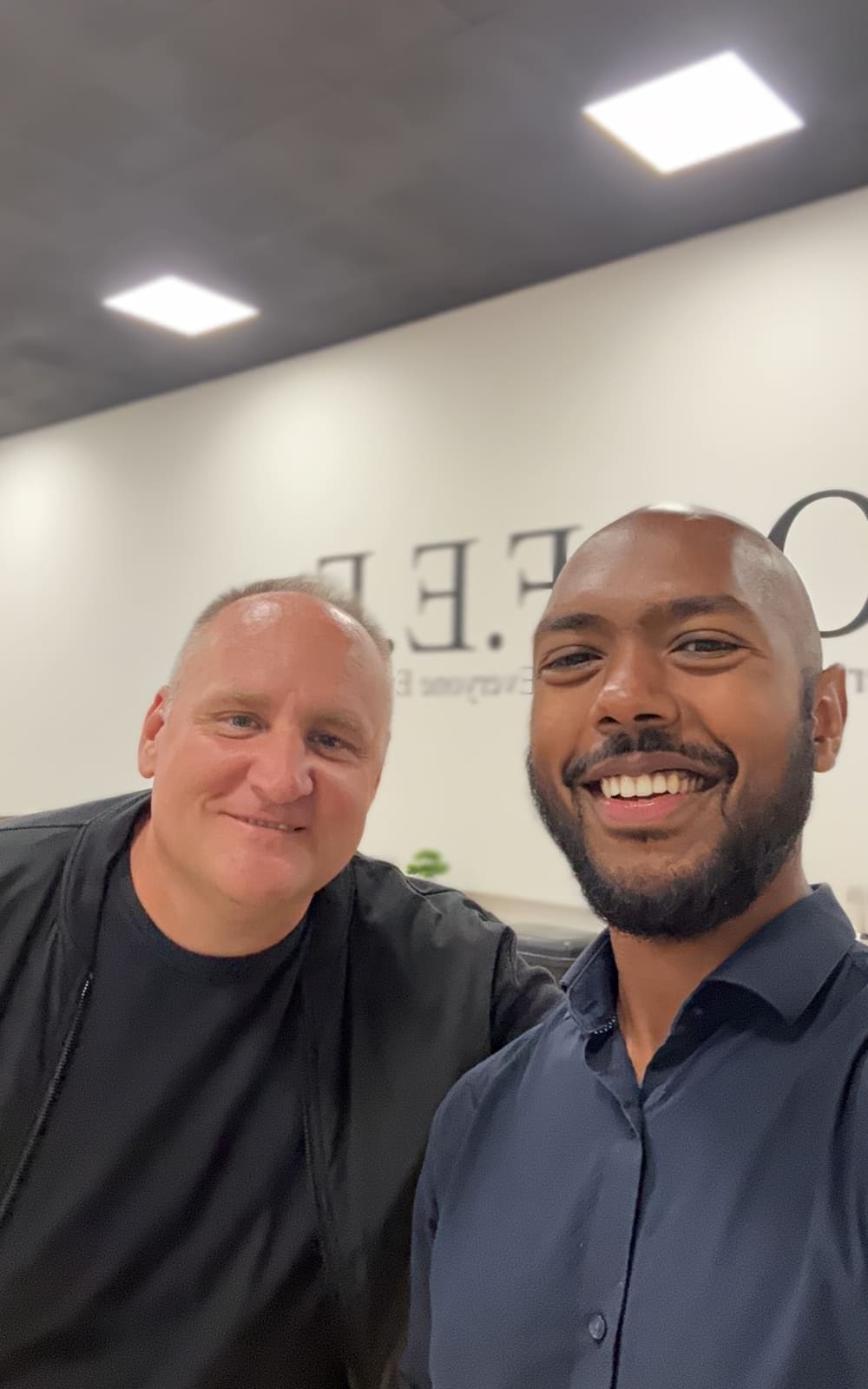
We just had the best time. I’d only just met these people (Danko aside) and it felt so familiar. It felt like family. It took me right back to the first church I ever went to, in Doha in 2008, where people seemed so happy I was there that it got past my guard. Already something within me started to heal because I felt like I could finally let down and rest and relax. I was already starting to recharge.
After church we got a pizza and sat in the living room talking and laughing and telling stories of miracles after miracles, testimonies. I got to tell them mine (it’s here on my site) and it was such a blessing to share it. We’d come back from church around 8pm and at some point I was like, where are your kids? Turns out the kids just stay until 11pm!! They came back at 11 and after that we went to sleep.

That’s what the church did right after the Holy Spirit came at Pentecost. Luke says they would “break bread from house to house, sharing their meals with gladness and sincerity of heart” (Acts 2:46).
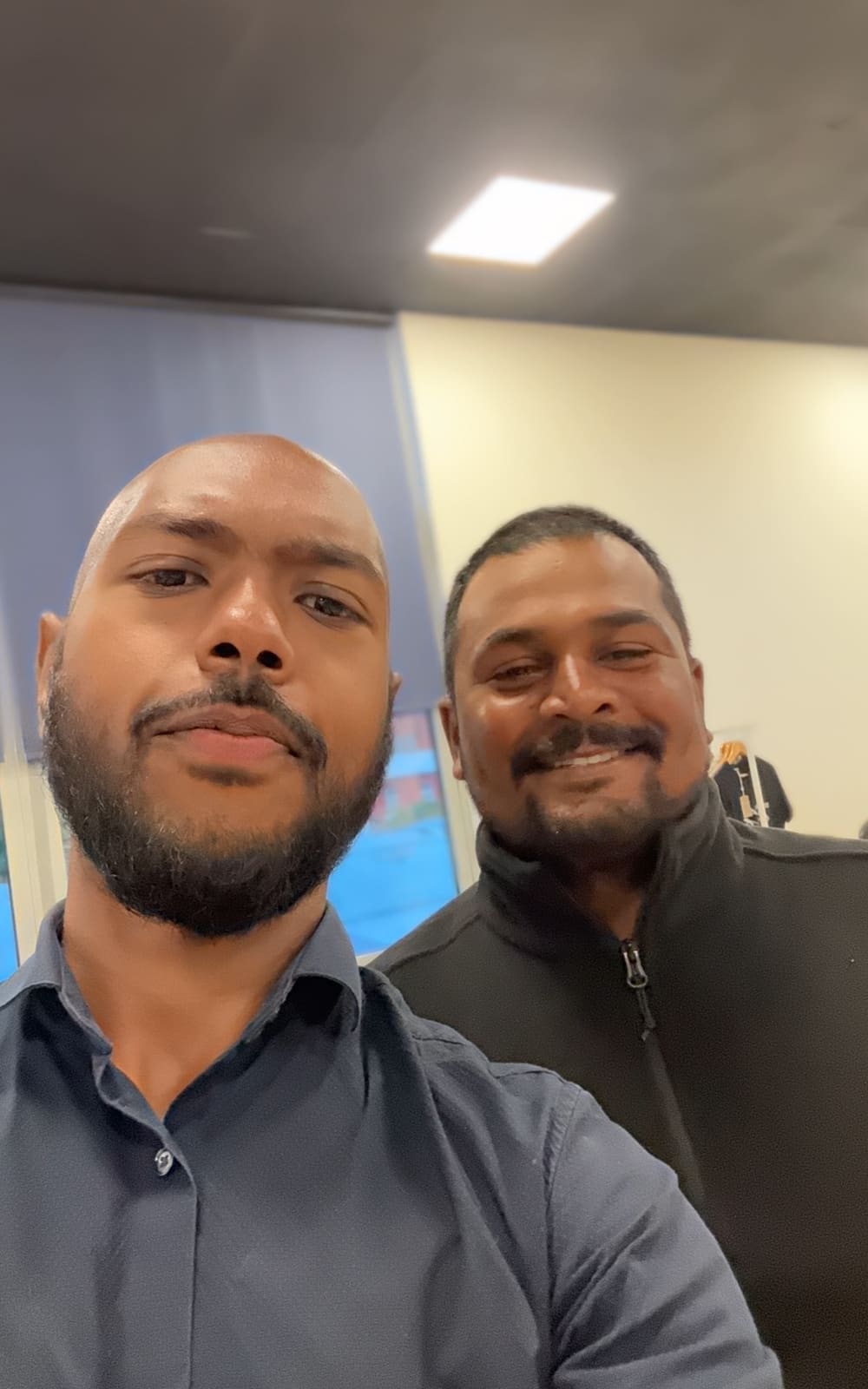
Elijah was in a much darker place than I was. He sat under a broom tree and asked God to take his life (1 Kings 19:4). God’s first answer was sleep and then an angel with “a cake of bread baked over hot coals, and a jar of water” (1 Kings 19:6). The angel came back a second time: “Get up and eat, or the journey will be too much for you” (1 Kings 19:7). Elijah had said “I have had enough, LORD” and in Hebrew his “enough” and the angel’s “too much” are the same word. God didn’t argue with him about being tired. The journey was too much for him on his own and God fed him. Danko’s family did the same with me: here’s your room, here’s food, and the word came on Monday.
What sin haunts you?
On Monday I still had my job so I did some work here and there, but I spent the day with them. We had breakfast and then lunch.
At lunch I literally looked Danko in the face and asked him, “What sin haunts you?”
He was so open. The man was an open book! Oftentimes I meet people who are guarded, they’re fronting and they’re not really saying what’s on their mind. Danko was no holds barred. He told me his struggles, his life. Then he looked at me and asked me the same thing and I told him. We had this beautiful moment and we just kept talking. That’s James 5:16 at a lunch table: “confess your sins to each other and pray for each other so that you may be healed”.
Somewhere in all that talking I told him, “I’m having a really hard time. I feel tired, I feel burned out, I feel like a lot of things depend on me, and I’m just like, man, I just want to rest.”
Danko looked at me and told me that whenever he finds himself making dumb choices or feeling burned out, it’s often because he doesn’t have power (especially when he compromises on his faith and his values). When he’s in a position of weakness and he’s had a stressful day, he feels overwhelmed by the pressure. He caves under it and makes dumb choices. All he wants then is some kind of release. He didn’t put it like this, but the picture I got was punching a hole in the wall. Then he told me what the Bible says in Acts 1:8: when the Holy Spirit comes on you, you will receive power.
Something clicked in me and I was like, oh, you’re right. I examined myself. Every time I’ve made dumb choices or had stupid ideas or been mean to someone, it’s usually been when I was under an immense amount of pressure. The pressure didn’t make me do any of it (James 1:14 says “each one is tempted when by his own evil desires he is lured away and enticed”). It squeezed out what was already in there.
Then Danko said this, word for word: “I just find paying attention to the pressure helps me a lot, because then I can regulate it and I can go pray. I can receive the Spirit’s power and be free.”
This was tremendous!! It was so eye-opening and I actually understood it. Under pressure, you crack. But the power that comes upon you when you receive the Spirit overwhelms the pressure. Jesus told his friends something close in Gethsemane, on the night he was arrested: “Watch and pray so that you will not enter into temptation. For the spirit is willing, but the body is weak.” (Matthew 26:41)
What does power mean in Acts 1:8?
The power in Acts 1:8 is dynamis, which Strong’s defines as “force (literally or figuratively); specially, miraculous power”. Under pressure our own dynamis runs out and Jesus promises us the Spirit’s.
Acts 4 shows what that looks like under pressure. The council threatens Peter and John and orders them to stop speaking in Jesus’ name. The church prays with the threats still standing: “consider their threats, and enable Your servants to speak Your word with complete boldness” (Acts 4:29). They don’t ask for the threats to go away. After they prayed, “they were all filled with the Holy Spirit and spoke the word of God boldly” (Acts 4:31). Peter had already been filled at Pentecost (Acts 2:4) and again in front of the council (Acts 4:8). Here he’s filled again with everyone else, under pressure, after prayer.
The same ESV Study Bible notes list “power for victory over sin” among what this new work of the Spirit brought after Pentecost. They cite Romans 8:13 for it: “if by the Spirit you put to death the deeds of the body, you will live”.
Danko said that under pressure all he wants is some kind of release. Jesus calls sin slavery: “everyone who sins is a slave to sin” (John 8:34). Then, 2 verses later: “So if the Son sets you free, you will be free indeed” (John 8:36).
Paul says it in Romans 6:14: “For sin shall not be your master, because you are not under law, but under grace.” I still sin (I just told you about a lunch where 2 grown men confessed theirs) and 1 John 1:8 says “If we say we have no sin, we deceive ourselves”. So when I say sin has no hold on me, I mean it doesn’t get to lord it over me anymore.
If you belong to Christ you already have the Spirit (Romans 8:9). Paul still tells believers to “be filled with the Spirit” (Ephesians 5:18). The command is in the present tense and many read it as keep on being filled. Jesus says the Father will “give the Holy Spirit to those who ask Him” (Luke 11:13).
How do I apply Acts 1:8 to my life?
Pay attention to the pressure and then go and pray: that’s what Danko does. He drove me to the airport and I’d started meditating on what he said. On the 1 hour 45 minute flight home I did what he does. I just prayed and read a bit of the Bible and the power came!! All the pressure I was feeling left. By the time I was on my way home from the airport I was ready to jump into a game night with friends.
My status page has the nights on either side of that flight. Sunday night at Danko’s house was my worst of the 60 nights on it: my HRV was 28 milliseconds and my resting heart rate was 62. On Monday night, at home in Berlin, they were 53 and 47. My 7 night average was still well below normal and on Tuesday morning the app still told me to rest.
| Night | My HRV | Bottom of my normal range |
|---|---|---|
| 5 Oct | 37 ms | 47.4 ms |
| 6 Oct | 40 ms | 47.4 ms |
| 7 Oct | 46 ms | 47.5 ms |
| 8 Oct | 40 ms | 47.5 ms |
| 9 Oct | 35 ms | 47.4 ms |
| 10 Oct | 42 ms | 47.2 ms |
| 11 Oct | 28 ms | 47.2 ms |
| 12 Oct | 53 ms | 46.7 ms |
That’s my testimony from 1 flight and 1 night. Scripture doesn’t promise that the pressure always goes when you pray (Jesus promised tribulation in John 16:33 and it’ll be back).
In Acts 1:8 the power is for witness, for telling people what Jesus has done: Acts 1:22 calls it being “a witness with us of His resurrection”. For me that was Sunday night in Danko’s living room, telling them my story. On Monday the power turned me toward a crowd at an airport.
If you’re as cooked as I was, eat something and get some sleep (and see a doctor if it’s more than tired). God fed Elijah twice before the journey. Then find someone you can ask what sin haunts them and let them ask you back.
In Me you may have peace
Peace is the word Jesus put right next to the pressure: “in Me you may have peace. In the world you will have tribulation” (John 16:33). And Paul joins the power and the peace in one blessing: “Now may the God of hope fill you with all joy and peace as you believe in Him, so that you may overflow with hope by the power of the Holy Spirit” (Romans 15:13).
With that peace, who I am doesn’t hang on how many things I said yes to or what my HRV did last night. I’m made in the image of God, I’m redeemed and I’m still being made holy.
It changed me in a very interesting way too: it woke up my compassion. At the airport and onward I saw so many people struggling. They were stressed, they had worried expressions on their faces and they were complaining that passport control didn’t work. Some were mean to other people and there was a lot of discord.
I used to judge people for all of this. My old reaction would have been these people are dumb, or they’re bad, or why are they so childish? Even when the plane lands and everyone gets up at the same time, trying to go nowhere fast, I used to judge that. This time I just recognized that they’re probably under a lot of pressure. I looked at them without any judgment and I was like, man, they must be under so much pressure. It broke my heart.
That’s how Jesus looked at a crowd: “When He saw the crowds, He was moved with compassion for them, because they were harassed and helpless, like sheep without a shepherd” (Matthew 9:36). And the next thing he does is tell his disciples to pray (Matthew 9:38).
And I felt compelled to pray for them, genuinely: God, I hope they have the peace that you’ve given me.
The joy of the Lord is my strength
Paul’s blessing in Romans 15:13 starts with joy. Nehemiah first said what joy does for God’s people to a crowd that was crying. Ezra had just read God’s Law to them and “all the people were weeping as they heard the words of the Law” (Nehemiah 8:9). Nehemiah sends them off to eat and drink and to share with anyone who has nothing prepared. Then he tells them “Do not grieve, for the joy of the LORD is your strength” (Nehemiah 8:10).
Nehemiah says “your strength” to everyone there. I say “my strength” (I’m standing in that crowd too). The Hebrew word for strength is ma’oz, “a fortified place” in Strong’s. So the reason Nehemiah gives a weeping crowd to stop grieving is that the joy of the Lord is their stronghold. My church in Berlin has it in its own description: Mosaik is “a diverse group of people united by a common dream: the joy of the Lord everywhere.”
I’d told Danko all I wanted was to rest. And Jesus says “Come to Me, all you who are weary and burdened, and I will give you rest” (Matthew 11:28). The joy in him is the rest.
And the joy is there because he came to our rescue. That’s the gospel: “He has rescued us from the dominion of darkness and brought us into the kingdom of His beloved Son” (Colossians 1:13). Paul passes it on “as of first importance”: “that Christ died for our sins according to the Scriptures, that He was buried, that He was raised on the third day according to the Scriptures” (1 Corinthians 15:3 to 4). Danko’s church has it on a wall.
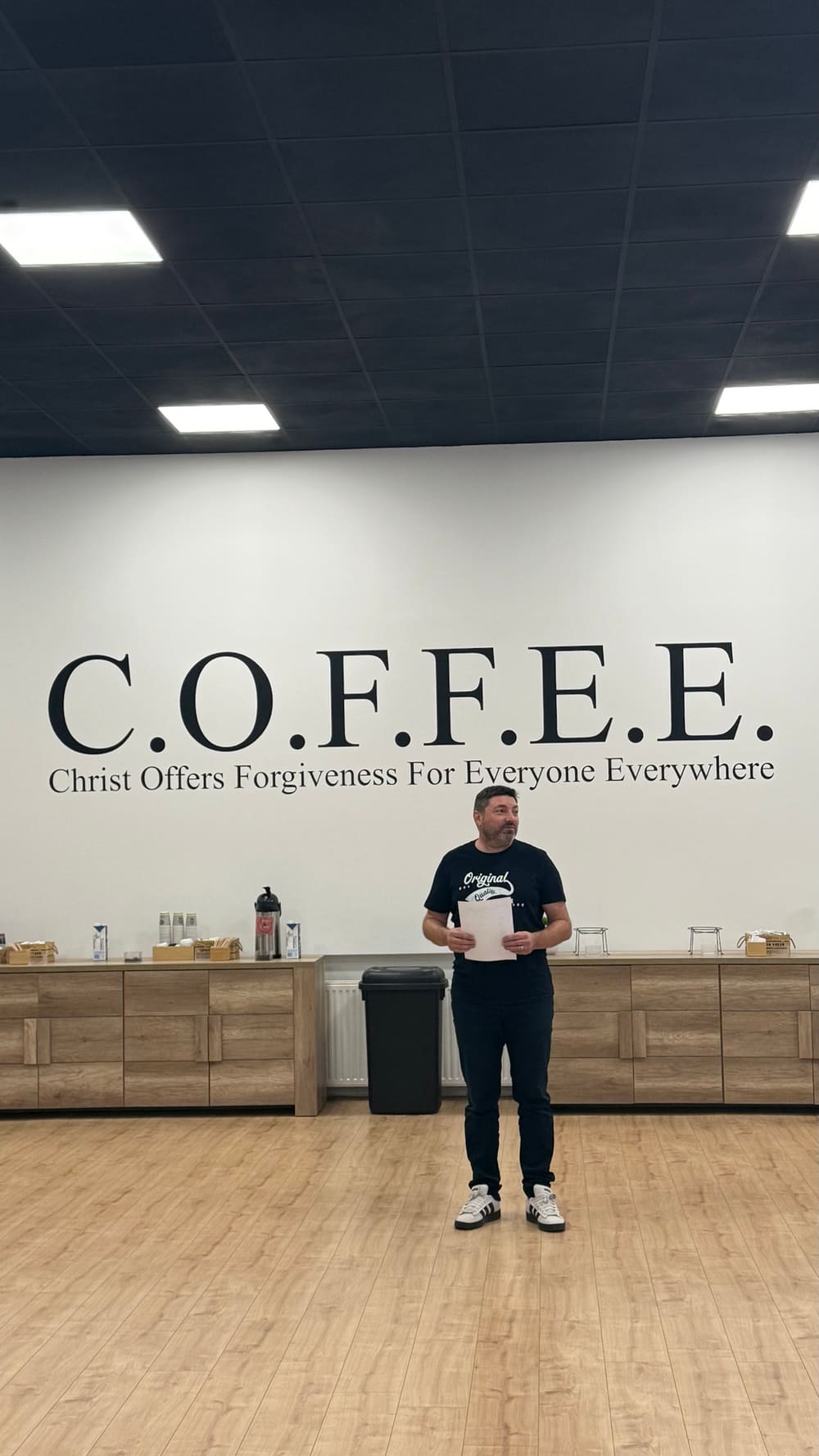
What made Christianity click for me in 2011 was that it says “trying harder is going to exhaust you for nothing” because you can’t save yourself. That’s a sentence about burnout!
If I have joy in him I will naturally collaborate with him and also resist temptation. Charles Spurgeon preached on this verse on 31 December 1871 (The Joy of the Lord, the Strength of His People) and said the man who possesses “the joy of the Lord” finds “that it fortifies him against temptation. What is there that he can be tempted with? He has more already than the world can offer him as a reward for treachery.”
Because he rescued us we get to work with him. Paul says of himself and Apollos, “we are God’s fellow workers” (1 Corinthians 3:9). Even that is his doing: “it is God who works in you to will and to act on behalf of His good purpose” (Philippians 2:13).
When my idols stop being idols
Joy in God changes what I do with the things I love too. I build Daiku, an add-on that gives the AI you already use a browser logged in to your sites. And I love running (still). Both could easily be idols: things I grind for, things I feel depend on me. With my joy in God they stop being idols and turn into something I do with him.
Thomas Chalmers preached about this in The Expulsive Power of a New Affection: “The heart is not so constituted, and the only way to dispossess it of an old affection is by the expulsive power of a new one.” Joy in God pushes the idol off the throne and what’s left is a good thing I get to do with him “to the glory of God” (1 Corinthians 10:31). Paul puts exercise in its place: “physical exercise is of limited value, but godliness is valuable in every way” (1 Timothy 4:8).
God keeps telling me to surrender. It’s hard. His way is better. Jesus prayed “Yet not My will, but Yours be done” (Luke 22:42) under more pressure than I will ever know.
God does everything on purpose. “God works all things together for the good of those who love Him, who are called according to His purpose” (Romans 8:28). The next verse says what the good is: being “conformed to the image of His Son” (Romans 8:29). I didn’t plan to be a drive away from Danko’s church in the same week I burned out.
Questions
What does Acts 1:8 mean?
In Acts 1:8 Jesus promises his followers power when the Holy Spirit comes upon them so they can be his witnesses "in Jerusalem, and in all Judea and Samaria, and to the ends of the earth." The power is a gift they receive. It came first at Pentecost (Acts 2:4) and the same Spirit filled the believers again when they prayed under threat (Acts 4:31).
What does power mean in Acts 1:8?
The Greek word is dynamis, which Strong's Concordance defines as "force (literally or figuratively); specially, miraculous power". It's power God gives: Paul says "this surpassingly great power is from God and not from us" (2 Corinthians 4:7). In Acts 1:8 it's power to be a witness who tells people Jesus rose from the dead (Acts 1:22). After Pentecost the same Spirit also gives power over sin: "if by the Spirit you put to death the deeds of the body, you will live" (Romans 8:13).
How do I apply Acts 1:8 to my life?
Pay attention to the pressure in your life, then go and pray. That's what Danko Dudok, a pastor in Belgrade, does to receive the Spirit's power under pressure. Jesus told his disciples something close in Gethsemane: "Watch and pray so that you will not enter into temptation" (Matthew 26:41). Then expect the power to make you a witness who tells other people what Jesus has done, the way Acts 1:8 sends the disciples out (Acts 1:22).
What does it mean when the Holy Spirit comes upon you?
In the Bible, the Spirit coming upon someone means God equipping them for what he's given them to do: Gideon (Judges 6:34), Mary (Luke 1:35), and the disciples for witness (Acts 1:8). For the disciples it happened first at Pentecost (Acts 2:4). Every Christian already has the Spirit (Romans 8:9). Paul still tells believers to "be filled with the Spirit" (Ephesians 5:18) and Jesus says the Father gives the Holy Spirit "to those who ask Him" (Luke 11:13).
What does the Bible say about burnout?
The Bible never uses the word burnout, but it talks a lot about pressure. Jesus says "In the world you will have tribulation" (John 16:33) and the Greek word for tribulation, thlipsis, means pressure. In the same verse he promises "in Me you may have peace". God gave the exhausted Elijah sleep and food before anything else (1 Kings 19:5 to 7). And Jesus promises rest to all who are weary and burdened (Matthew 11:28).
What Bible verses help with burnout?
Matthew 11:28 promises rest to "all you who are weary and burdened". In 1 Kings 19:5 to 7 God gives the exhausted Elijah sleep and food twice. 2 Corinthians 4:8 says "We are hard pressed on all sides, but not crushed". Jesus promises peace in him (John 16:33), Nehemiah calls the joy of the Lord the strength of God's people (Nehemiah 8:10), and Paul prays for hope "by the power of the Holy Spirit" (Romans 15:13). None of them replaces sleep or a doctor.
Is it correct to say the joy of the Lord is my strength?
Yes, as a personal application of Nehemiah 8:10. The verse calls the joy of the Lord "your strength" because Nehemiah was speaking to a whole crowd of God's people who were weeping as they heard God's Law. Saying "my strength" takes that promise as spoken to you too. The Hebrew word for strength, ma'oz, means a fortified place: a refuge to run to.
Written by me, Tejas Kumar, an AI Engineer at IBM based in Berlin. Read everything else I have written, or go to Fluent React, my O'Reilly book on how React works inside, the talks I give at conferences, and ConTejas Code, my podcast.